
A Chef’s Eye on the Catch
Posted on October 13, 2026 by Local Fish
What happens when a trained chef becomes a commercial fisher?
For Jennifer Alvarez, it means thinking about dinner long before the fish ever reaches the dock.
Jennifer came to commercial fishing after years spent working as a chef, opening restaurants and producing farm-to-table dinners (a passion that is still underway today). We’ve shared more of her story before, but when we recently caught up with her again, we wanted to dig into something different: how does a career spent in professional kitchens influence the way you approach catching a fish?
As it turns out, quite a bit.
Like many of San Diego’s quality-focused fishermen, Jennifer puts enormous care into what happens to her catch on the boat. But she approaches those decisions with an unusual perspective: the mind of a chef. Jennifer knows exactly what she wants that fish to look, feel and taste like when it eventually lands in a chef’s hands. For her, producing a great piece of seafood starts the second the fish takes the hook.
The Plate Starts on the Boat
“I know what happens to a fish on the boat impacts what happens on the plate,” Jennifer says.
She fishes hook and line and tries to get each fish aboard as quickly as possible. She doesn’t want fish unnecessarily fighting or being dragged through the water. If necessary, she’ll reverse the boat to get to a fish faster. Once aboard, the attention continues. “We bleed it immediately, use ikejime and get it right onto ice,” she says. “I’m not skimping on the ice.”
None of these techniques are exclusive to Jennifer. Fishermen around San Diego use careful handling practices to produce incredible seafood every day. What’s interesting about Jennifer is the perspective she brings to those techniques after spending years on the other end of the supply chain. Jennifer is thinking like a fisher and a chef at the same time.
Why Does Handling Matter So Much?
For Jennifer, catching the fish is only the beginning. She believes minimizing stress, bleeding the fish quickly and rapidly chilling it all contribute to the quality of the final product.
And she isn’t reserving that level of attention for a giant Bluefin or another particularly valuable catch. “I do it to every single one, including the rockfish,” she says.
That’s an important part of her philosophy. A Halibut, Rockfish, Lingcod or White Seabass headed for someone’s dinner deserves the same thought about what it’s ultimately going to become. Because Jennifer knows what happens next. She’s going to notice the texture. The color. The flake. How it behaves when it’s roasted. How it holds up on a grill. And ultimately, how it tastes.
The Chef in Her Wanted Proof
Ikejime, a Japanese fish-dispatch technique that involves quickly killing the fish and disrupting the spinal cord, has attracted increasing attention among chefs and fishermen interested in fish quality. Jennifer didn’t simply accept that it produced a better result. She tested it.
“I started doing side-by-side comparisons with ikejime because I wanted to test it myself,” she says. “You can definitely tell the difference.”
That experimentation feels particularly true to her culinary background. Chefs spend their careers making tiny adjustments and observing the results. Change the temperature. Change the timing. Change the technique. Taste it again. Jennifer is essentially applying that same mentality on the boat.
And Then There’s the Ice
It may not be the most glamorous part of catching a beautiful fish, but Jennifer comes back again and again to temperature. Get the fish cold. Keep it cold. Use enough ice. “I’m not skimping on the ice.”
Rapidly chilling the catch and carefully managing it on the boat is part of preserving the product she’s worked so hard to catch. It also illustrates something we don’t always think about as consumers. We tend to judge seafood by the moment we encounter it at the market or restaurant. But its quality has been shaped by a long series of decisions that happened before we ever saw it.
A Fisher Who Knows What the Chef Wants
Perhaps the biggest advantage of Jennifer’s unusual career path is that she understands exactly what happens after delivery. Ask her about Lingcod and she doesn’t just talk about catching it. She talks about eating it. “The butteriness of the Lingcod, it’s succulent,” she says.
She loves its fine flake, the way it roasts in the oven and the way she can prepare it on a grill. White Seabass is another favorite, both because she loves the texture and because catching the elusive fish still feels like a prize.
That culinary knowledge also makes her excited about species beyond the fish that tend to dominate restaurant menus. “I love doing Halibut, Seabass, Rockfish. I do it all,” she says. “I love catching the migratory stuff, but if I can sell some of these other products where they can cook the whole fish, and they don’t just want Tuna…”
For a chef receiving one of Jennifer’s fish, that creates an interesting relationship. The person who caught the product understands exactly what they’re going to do with it.
What Makes a Great Fish?
Jennifer’s story raises an interesting question for anyone who buys seafood. We talk a lot about what kind of fish we’re eating. We ask whether it’s local, where it was caught and how it was caught. But there’s another question worth asking:
What happened to that fish after it was caught?
Two fish of the same species caught in the same waters can have very different journeys to the plate. How quickly was the fish brought aboard? Was it bled? How was it dispatched? How quickly was it chilled? How was it stored? How long did it take to reach the person preparing it?
These aren’t necessarily things most of us think about while standing at a seafood counter, but they’re things fishermen and chefs who care deeply about quality think about all the time.
And when those two perspectives exist in the same person, things get particularly interesting.
Creating Value Through Quality
There’s a larger idea here for our local fishing community too. San Diego fishermen operate in an expensive and challenging environment. Boats, fuel, ice, gear, permits, maintenance and labor all cost money. Producing an exceptionally handled fish can require even more time, attention and expense.
Jennifer’s approach offers one example of how that additional care can become part of the value of the catch. Instead of seafood being valued only by species and weight, there’s an opportunity to value the story behind the product too: who caught it, how it was caught, how it was handled and how quickly it reached the kitchen.
That doesn’t mean there’s only one right way to produce a great fish. Far from it. San Diego’s fishing community is full of generations of knowledge about how to catch and care for seafood.
Jennifer simply brings another perspective to that tradition. She spent years standing in kitchens thinking about how to make an ingredient taste as good as possible. Now she’s taking that thinking all the way out to sea.
For Jennifer, the process of preparing dinner doesn’t start when a chef picks up a knife. It starts when the fish takes the hook.
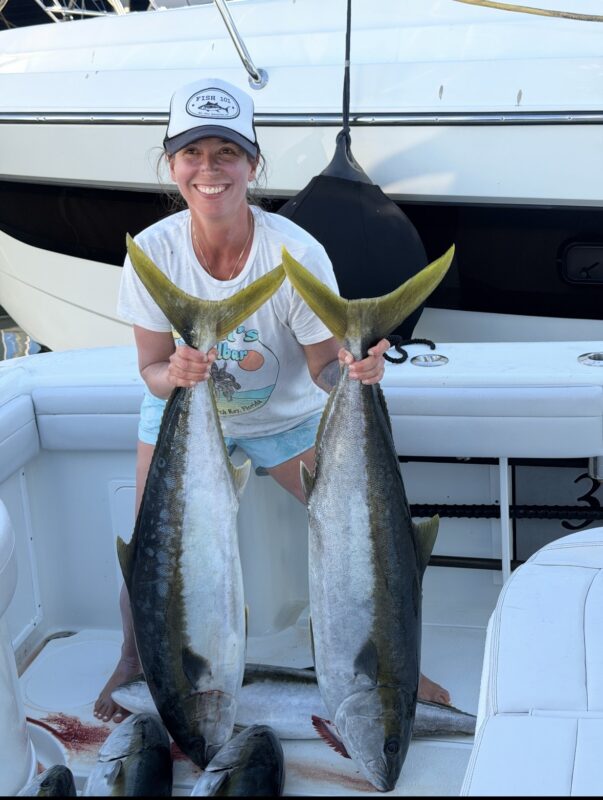
Chef Jen on the boat