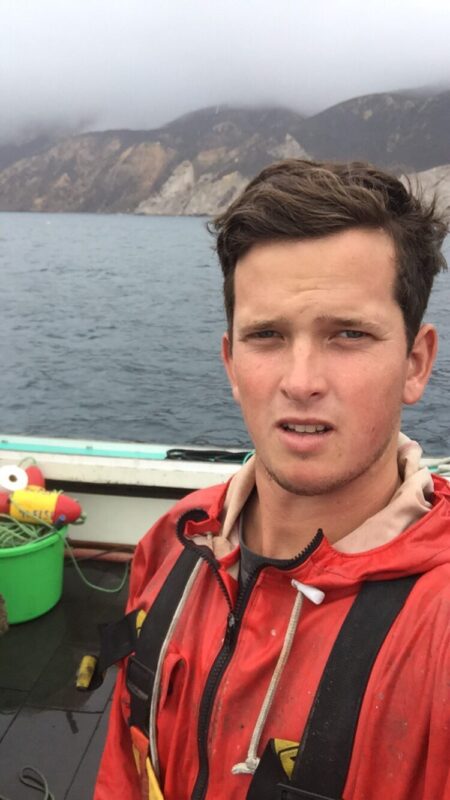
Interview With Zachary Rypysc
Posted on March 2, 2026 by Local Fish
Conducted by Thomas Fies, Program Operations Intern
HOW DID YOU INITIALLY GET INTO FISHING?
Fishing has been a big passion of mine ever since I could walk. I began volunteering on local charter boats when I was 12, in exchange for free fishing. I remember being around that age when I would be up sorting crab at 3am every Saturday morning.
In college, I remember seeing the lobster fleet leaving the harbor every time I was in the chemistry lab. And, after two years of seeing them pass by, I couldn’t handle sitting in that chair away from the action. So I dropped out, flew myself to Bristol Bay, Alaska sleeping on gill nets until I found an open spot to crew.
I fished seven seasons of lobster in Santa Barbara, eight seasons in Bristol Bay Alaska fishing Salmon, and one season fishing dungeness crab out of Westport, Washington, with intermittent work on longline boats in between seasons.
I bought and rebuilt my first boat when I was 22 while also crewing on a lobster boat. I’ve owned and operated F/V Defiance for a year and a half now after completely gutting and rebuilding it!
YOU RECENTLY MOVED TO SAN DIEGO FROM THE SANTA CRUZ AREA. WHAT BROUGHT YOU HERE?
Norcal fishing is amazing, in that the colder waters provide a larger population and biomass of groundfish. More fish, and rougher conditions, gave way to larger operations with bigger quotas and the ability to run through 10 times the traps than I can. With a much higher volume of fish like black cod surging through the market coupled with limited weather windows to leave port – the price and demand for fish became very sporadic which made it really hard to make a consistent living. San Diego is virtually fishable every day, with 120 square miles of reef to explore!
WHAT GOALS DO YOU HAVE FOR IKEJIME SEAFOODS?
My goal is getting steady, sustainable growth while building a customer base and strengthening the relationships we already have. It would be cool to eventually set up something like a Community Fishing Association, where we could gather a cooperative of local fishermen to communicate directly to consumers about what’s available each week, then fish specifically for those orders. It keeps things simple and gives future opportunities to build infrastructure for the public to buy straight from the boat. This system cuts the time in half from when the fish is caught to when it’s in the consumers’ hands. No more sitting on ice or in warehouses for weeks at a time, moving from buyer to buyer before reaching the customer.
WHAT ARE YOU MAINLY TARGETING RIGHT NOW?
Currently, sanddabs, mackerel, and rockfish. We’re also looking to expand into black cod directly to consumers and restaurant partnerships outside of the Saturday market. That’s something we’re working towards as we grow and diversify where and how we sell.
WHAT ARE SOME OF THE BIGGEST CHALLENGES YOU’VE BEEN FACING SINCE MOVING HERE?
One of the biggest challenges has been navigating a competitive and tightly regulated market. San Diego has a large, well-established seafood industry, and as a small, independent operation, it’s taken time to understand how to operate within that landscape. Relationships take longer to build, and access to markets can be more limited for smaller producers.
Market size and buyer access have also been challenging. It’s been especially difficult at times to find buyers for species like sand dabs, which requires more outreach in this region.
Overall, it’s been a learning experience adapting to a different market structure while continuing to build connections and trust within the local fishing community, all while maintaining the mechanical side of boat operations and figuring out how to catch the fish itself.
WHAT ADVICE WOULD YOU GIVE TO YOUNGER PEOPLE ENTERING THE INDUSTRY?
I’d encourage younger fishermen to focus on building the business side of their operation, especially developing direct relationships with restaurants and retail customers. Diversifying beyond wholesale can create more stability and allows you to have greater control over quality and pricing. And, there’s more appreciation for quality and care when you’re closer to the end customer.
Customers also just appreciate having a fresher product. We cut open a fish that we didn’t bleed or ikejime, and filleted it next to one that we did, and it’s just night and day difference in quality. All those little things matter. And it’s easier to do so when it’s local.
IF YOU COULD CHANGE SOMETHING ABOUT YOUR EXPERIENCE, WHAT WOULD IT BE?
I would’ve focused earlier on building direct retail and restaurant relationships instead of relying on wholesale at the beginning. It took me some time to realize how important it is to control your own pricing and tell the story of your product.
Early on I was selling fish at very low prices, which made it really hard to sustain the operations. I was pushing myself too hard to make that work – going on trips and staying awake for over 48 hours straight and only drinking protein shakes in order to make a living on such low prices I was selling at. Looking back, investing sooner in retail would’ve made things more stable and allowed the business and myself to grow in a healthier way.
WHAT’S YOUR PHILOSOPHY ON FISHING AND SUSTAINABILITY?
Keep it simple. The main factors that run the markets are quality and sustainability. I feel like they’re directly proportional to each other. If you focus more on quality, you’re not gonna harm populations as much. And, if the quality is there, the customers will come naturally.