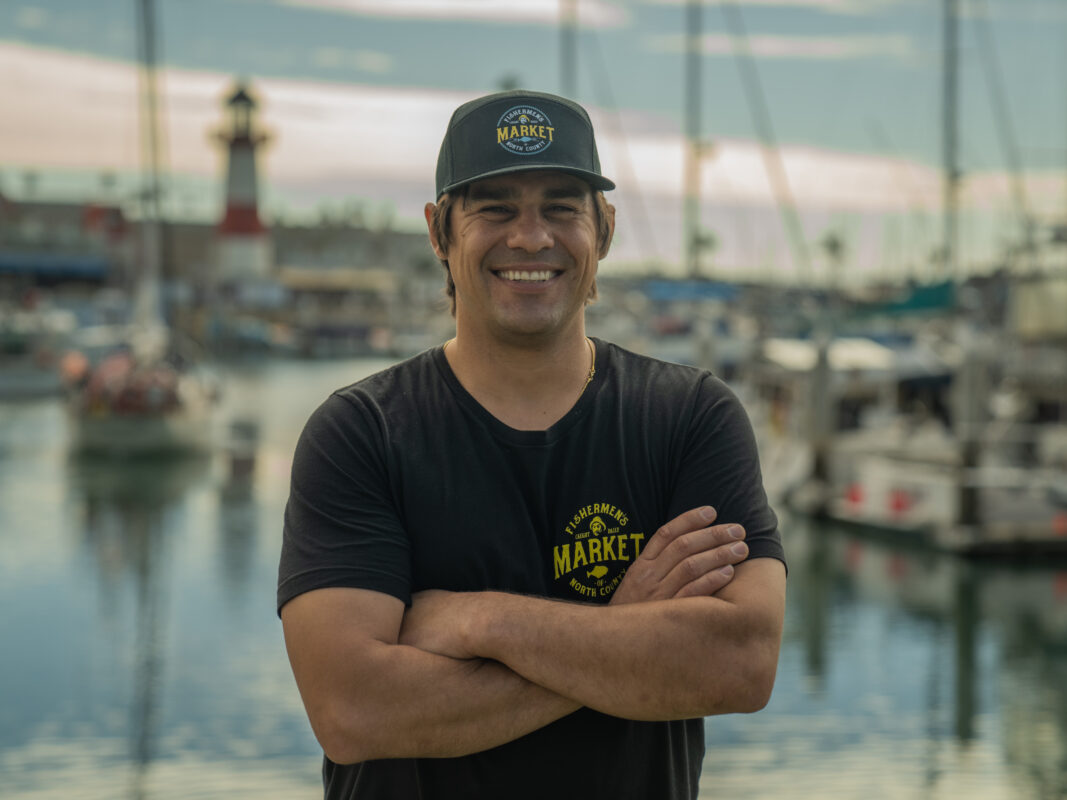
Interview with Travis Tielens
Posted on January 9, 2026 by Local Fish
Kate: I want to start by talking about the Oceanside Fisherman’s Market and how that began, but first—how did you originally get into fishing? Was your family in the industry, or did you pick it up yourself?
Travis: My neighbor was one of the first mates on the Antoinette W. He lived directly next to me, and I would mow his lawn every week. One day, he said, “Hey man, if you can lift the lids to the bait barge, you can work on the bait barge.” So at about 11 or 12 years old, I started working for James at the Oceanside Bait Company. At around 16 years old, I started working on the boat.
Kate: And you were a deckhand at that point? When did you start fishing yourself, or was that tied in from the beginning?
Travis: I’d been fishing on the boat ever since—first as a deckhand, and then as people cycled out, I was in line to take over the captain’s role. But I knew fishing wasn’t what I wanted my entire future to be. I broke off for a few years and tried the entrepreneurial thing. I started a website business that didn’t work out, but I eventually made it back to fishing. Then I found this other entrepreneurial opportunity and took it.
Kate: That’s a great transition into the idea for the Oceanside Fisherman’s Market. What sparked it, and why did you feel the North County community needed it?
Travis: During COVID, fishermen were selling their product in the parking lot, and the city shut it down because they didn’t have proper permits. I heard stories of several fishermen trying to establish a fisherman’s market, but they couldn’t make it happen. It took me about 2.5 years and a lot of persistence. I was told “no” many times.
Kate: So many people are grateful these markets exist. It’s so special that in San Diego, you can meet the person who caught your food and buy something seasonal and local.
Travis: It’s been very rewarding. People tell me it’s life-changing and that I’m doing a good thing for the community. A lot of comments like that make it worth it.
Kate: What’s your favorite thing about running the market—whether day-to-day or the connections you’ve made?
Travis: The challenge. It’s very challenging to stay afloat, keep the doors open, manage the fishermen, coordinate the workers, schedule everything, and keep finding ways to improve. If it wasn’t challenging, I’d get bored.
Kate: Can you expand on that? In terms of getting fish to tables, what are the biggest challenges?
Travis: The politics between fishermen. It’s the biggest challenge and the biggest risk. At any moment, things can go south depending on how they perceive what’s going on or what your relationship is with them. Tempers can flare. Keeping the peace is challenging.
Kate: How do you find fishermen who want to be part of the market? Do they come to you, or do you reach out?
Travis: Some contact me through the website. Some approach me at the market. The legacy vendors are from this harbor—I’ve grown up around them, and they’ve been part of the discussion since the beginning. We have several core fishermen who are there weekly. The ones who aren’t consistent, I don’t invite back. Consistency is huge. We’re here all the time, and if someone is wishy-washy, it makes my job harder. If they say they’ll be here, they have to be here.
Kate: That makes total sense—you put so much effort into organizing and making sure everything runs smoothly. Consistency affects your customers, too.
Travis: Exactly.
Kate: Why do you think consumers benefit from a fisherman’s market compared to a storefront or restaurant? There are only two of these markets—Tuna Dockside and yours. What makes them different?
Travis: The quality. People tell me they didn’t even know what fresh fish was until they started shopping here. Some say they weren’t even fish eaters because they didn’t know what good fish tasted like. So the quality is hands down the biggest difference.
Kate: I’ve heard that a lot—the freshness, the face-to-face interaction, how recently it was caught. It really changes the taste and the experience.
Travis: Absolutely. We also have a strict policy. I have a board, four of the main players at the market, and we set policies for landing receipts. They can’t be older than Wednesday. We check paperwork every week. Nobody brings in fish that’s a week or two weeks old. That’s a huge part of why people keep coming back. It’s also a safeguard—we don’t want a bad reputation or, worst case, someone getting sick. I’m not trying to say anything against competitors, but their policies aren’t as strict, and I’ve heard some horror stories.
Kate: That’s important for people to know, different places have different levels of vetting.
Travis: Exactly.
Kate: If you could change one thing about the fishing industry, other than the politics, what would it be?
Travis: The regulations. You need a license for everything, and then a permit for everything else. You practically need a college degree to understand all the policies. You’ll talk with a Fish and Game warden or a NOAA officer, and a lot of times they don’t know either because there’s so much legal jargon.
Kate: I study this and still feel overwhelmed by the details. I can’t imagine being on the water and trying to keep track of everything.
Travis: I’m all for conservation. I don’t want more damage to natural resources. But the regulations have created a lot of confusion. I wish they put it in simpler terms.
Kate: Absolutely, policy isn’t designed to be clear. Transparency is something Tanner and I really care about and want to bring to fishermen. That was a great point.
Travis: It’s also a hard industry to make a living in. The established guys just keep accumulating, blocking opportunities for younger generations. There’s not a lot of room for new fishermen to make a career out of it.
Kate: That’s a huge problem. Young fishermen aren’t following in these footsteps, partly because the industry feels so intense and difficult and ruthless.
Travis: It is ruthless. These guys are territorial. They’ll mess with you if you’re a young guy trying to make it. They don’t like competition, and they’ll sabotage you.
Kate: I don’t doubt it. It’s a rough industry.
Kate: To end on a lighter note: do you have a favorite restaurant in Oceanside you or your family loves?
Travis: By far, Wrench and Rodent.
Kate: Chef Davin—I was there last night and finally got to meet him.Travis: He’s a cool dude. His food is amazing. I’m not just saying that. It’s bomb.