
How to Sell Fish Commercially in California (2026 Guide)
Posted on July 22, 2026 by Local Fish
Catching the fish is the easy part. Legally selling it is where most fishermen get stuck, not because the rules are impossible, but because nobody hands you the full list in one place.
So here’s the whole thing, start to finish. If you’re figuring out what you need to sell fish commercially in California, this is every piece of paper you’ll need and why.
Quick answer: To sell fish commercially in California you need a Commercial Fishing License, a Commercial Boat Registration for your vessel, a business license that matches how you sell (Fisherman’s Retail, Fish Receiver’s, or Multifunction), and an electronic fish ticket for every landing. Depending on your fishery, you may also need a species-specific vessel permit, insurance, and vessel safety documentation.
Let’s break down each piece.
Step 1: Get Licensed to Fish
Before you can sell a single fish, you need to be licensed to catch it.
Commercial Fishing License: Required for anyone 16 or older who uses a boat, net, trap, line, or other gear to take fish for commercial purposes in California. This is the foundational license. CDFW won’t issue any commercial fishing permit or stamp without it. Resident and nonresident rates differ, and you’ll need to set up a commercial fishing customer account with CDFW’s License and Revenue Branch before you can purchase one for the first time.
Species-specific permits, if you need them: Some of California’s most valuable fisheries are limited-entry, meaning the state caps how many vessels can participate. If you’re targeting southern rock crab, market squid, spot prawn, swordfish, or a handful of other species, you’ll likely need a separate vessel permit on top of your commercial fishign license. Check with CDFW before you assume you’re covered.
Step 2: Register Your Vessel, Twice
This trips people up because there are two separate registrations, from two separate agencies, and you need both.
Standard DMV vessel registration: The baseline registration every boat in California needs, commercial or not.
Commercial Boat Registration (CDFW): A second, separate registration specific to commercial fishing. It’s tied to the vessel itself, not to you personally, and CDFW requires it before they’ll issue a Commercial Passenger Fishing Vessel License or any of the limited-entry vessel permits listed above. If you sell, lose, or destroy the vessel, you’re required to notify CDFW right away.
Step 3: Get the Business License That Matches How You Sell
This is the step most fishermen get wrong, mainly because there are three options and each one only covers a specific kind of selling.
Fisherman’s Retail License For fishermen selling their own catch directly to consumers, think dock sales or farmers markets.
- Allows: direct retail sales, no middleman
- Doesn’t allow: reselling someone else’s catch, or selling to restaurants, caterers, or other businesses
Fish Receiver’s License For anyone buying fish from other fishermen to resell.
- Allows: purchasing from commercial fishermen, reselling to restaurants and retailers, issuing official CDFW fish tickets
- Comes with: heavy reporting requirements. This is the license most distributors and larger buyers hold.
Multifunction Fish Business License For fishermen or small businesses who want to operate across multiple roles.
- Allows: receiver, processor, wholesale, and retail functions under one license
- Trade-off: higher cost, but simpler compliance if you’re doing more than one of the above
If you only take one thing from this section: your Commercial Fishing License lets you fish. It does not let you sell to anyone besides a licensed receiver until you also hold one of these three.
Step 4: Report Every Single Landing
Every fish caught under a commercial fishing license, even for personal use, has to be landed and documented on an electronic fish ticket submitted through CDFW’s E-Tix system. There’s no way around this part.
If you’re landing through a licensed fish receiver, they typically handle the fish ticket. If you’re selling your own catch directly (Fisherman’s Retail License), you’re responsible for reporting it yourself through E-Tix. Landing fees are billed quarterly based on these tickets, so staying current on reporting also keeps you current on what you owe.
Step 5: The Two Things That Stall Fishermen Right Before a Sale
These aren’t licenses exactly, but they cause more delays than anything on the list above, usually right when a restaurant or retail buyer is ready to say yes.
Insurance. California doesn’t require boat insurance to fish, but marinas, receivers, and restaurant or retail buyers very often require it before they’ll transact with you. If you’re building toward institutional accounts, get this sorted before you’re mid-negotiation with a chef.
Vessel safety documentation. Restaurants and larger buyers increasingly ask for proof of a current vessel safety exam before they’ll buy direct. It’s not always a legal requirement to sell, but it’s becoming a practical one.
One more to flag: weighmaster registration. If you’re weighing product for resale, this is a county-level requirement (through your County Department of Agriculture), not a CDFW one, so it’s easy to miss if you’re only thinking about state licensing.
FAQ
Do I need a special license to sell fish I caught myself in California? Yes. A Commercial Fishing License only lets you catch fish. To sell it yourself directly to consumers, you need a Fisherman’s Retail License. To sell to restaurants or retailers, you need a Fish Receiver’s License or a Multifunction Fish Business License.
Can I sell fish to a restaurant with just a Commercial Fishing License? No. You’ll need to land your catch through a licensed Fish Receiver, or hold a receiver or multifunction license yourself.
How much does a California commercial fishing license cost? Fees change annually and differ for residents and nonresidents. Check CDFW’s current fee schedule at wildlife.ca.gov/Licensing/Commercial before budgeting.
Where do I register my boat for commercial fishing in California? You’ll need both a standard DMV vessel registration and a separate Commercial Boat Registration through CDFW.
What’s the difference between a Fish Receiver’s License and a Fisherman’s Retail License? A Fisherman’s Retail License only covers your own catch sold directly to consumers. A Fish Receiver’s License lets you buy other fishermen’s catch and resell it to restaurants, retailers, or other buyers, with heavier reporting requirements.
Want to skip the guesswork? Local Fish connects San Diego commercial fishermen directly with chefs and restaurants already looking to buy local. Apply as a fisherman →
This guide is a starting point, not a complete summary of California fishing law. For your specific situation, contact CDFW’s License and Revenue Branch at (916) 928-5822 or LRBCOMM@wildlife.ca.gov, or the South Coast Region office in San Diego at (858) 467-4201.
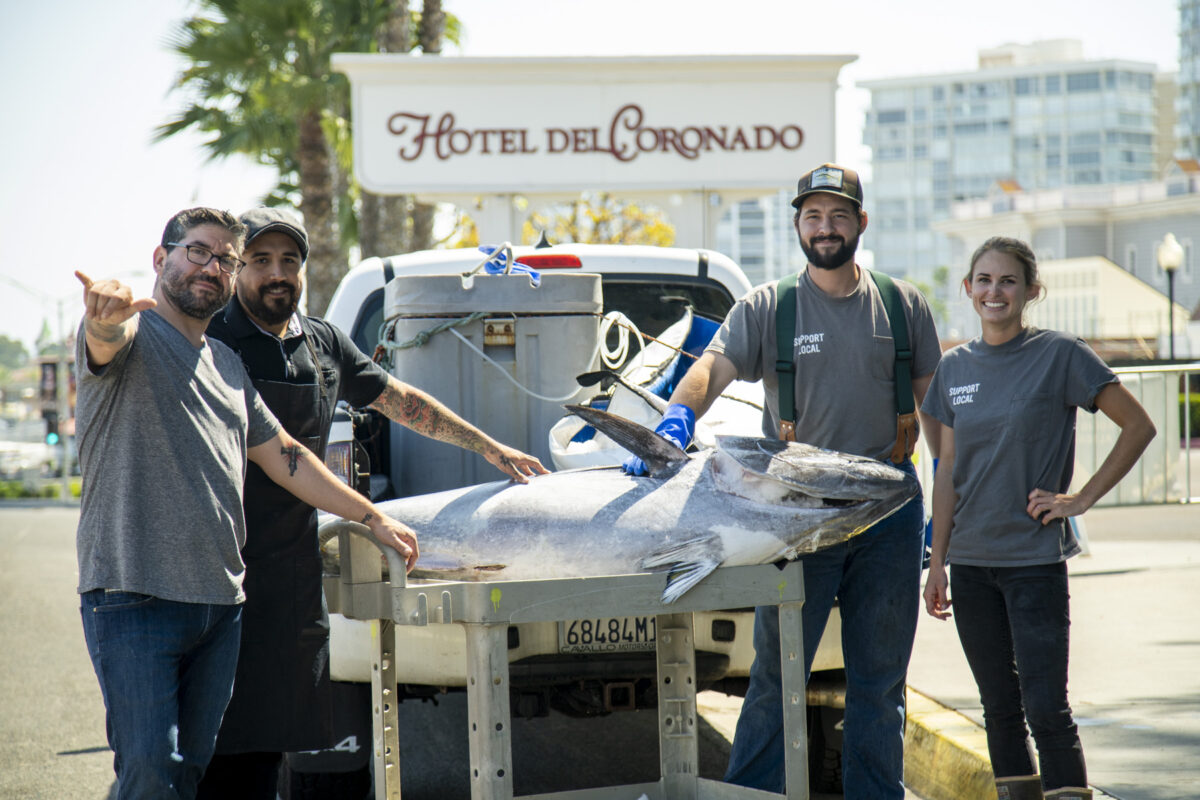
San Diego Restaurant Serea's Chef Jojo Sourcing Local Bluefin Tuna.